Full Costing: Definition, Pros & Cons

These write-downs or accounting expenses have a tendency to weigh on earnings and share prices. Fixed costs do not change with the production level of a product. Common examples of these costs include building rent, fixed salaries, utility bills, etc. Another common pricing method that is very similar to the full-cost principle is absorption pricing. Whereas https://quick-bookkeeping.net/ simplifies the numbers by using the same formula to allocate costs to a specific product, absorption pricing is more precise and more complex.

  • The business can then add a higher markup percentage to recover the fixed costs as well as make profits.
  • This will give you the single unit price using the cost-plus pricing method.
  • When using the full costing method, all direct, fixed, and variable overhead costs are assigned to the end product.
  • This approach stands in contrast to the successful efforts (SE) accounting method, which only capitalizes expenses related to fruitful extraction ventures.

The business can then add a higher markup percentage to recover the fixed costs as well as make profits. It is an approach that determines the selling price of a product by adding the markup over the marginal or variable cost of production. Tom’s Treat Toys is trying to figure out a fair price to charge for their finest fun figures. They decide they want to make a profit margin of 50 percent and sell 50,000 units. The company spends $2 million making all of their products and $600,000 on their total company sales and administration costs. The finest fun figures take up 25 percent of their manufacturing floor and 25 percent of their overall sales and administration costs.

What Is Full Cost Pricing?

Two contrasting types of accounting methods coexist because governing bodies are divided about which one best transparently reports a company’s earnings and cash flows. This method works well for businesses that produce customized products and use sophisticated technologies. It is derived by simply dividing the total cost calculated by the total number of units produced. Many of the countries where most sickle cells patients live don’t have enough sophisticated medical centers to provide the complicated treatment. Even in the U.S., the treatment may not be widely available, making it difficult to access.

  • The total cost of making and selling the product comes out to $650,000, which means that a 50 percent profit margin would be $325,000.
  • The markup should be based on the desired profit margin for the business, as well as the level of competition in the market.
  • Full cost pricing reduces ecological footprints to create an ecological deficit.
  • Businesses need to carefully track all their expenses and calculate the true cost of their products, which can be a time-consuming process.

The full-cost pricing theory is criticised for its adherence to a rigid price. Firms often lower the price to clear their stocks during a recession. Therefore, firms often follow an independent price policy rather than a rigid price policy. One of the weaknesses of the theory is that it fails to point out the firm whose full cost will determine the price in the oligopoly market that will be followed by the other firms. The below mentioned article provides an overview on the theory of full-cost or average cost pricing.

Monash Business School

It is one of the most common methods to calculate the selling price of a product. Then, it adds the desired markup to that amount, the resulting amount is the selling price. By allowing https://business-accounting.net/ for any possible product costs in the calculations, this pricing method also provides no incentive for designers and engineers to create a product in a less-costly manner.

If a business is only focused on covering their costs, they may miss opportunities to provide additional value to customers and build long-term relationships. Full cost pricing also helps businesses make better decisions about which products or services to offer. By factoring in all costs, businesses can determine which products or services https://kelleysbookkeeping.com/ are the most profitable and which ones are not. This information can then be used to focus resources on the most profitable products or services. If fixed costs of a firm form a large proportion of its total cost, a circular relationship may arise in which the price would rise in a falling market and fall in an expanding market.

For example, if a unit costs $5 to acquire, the price is set against this cost. When you’re looking for the right model for your business, cost-plus pricing can help you understand how much you need to make to gain a profit. From there, it’s important to understand the value of your product or service to maximize the potential revenue and connect with customers’ willingness to pay.

(c) They want to “keep the plant running as full as possible, giving rise to a general feeling in favour of price concessions”. Oil and gas companies spend a lot of money exploring new untapped reservoirs without any guarantee that they will find anything. Costs include acquiring land, obtaining the necessary permissions to extract, buying or leasing relevant equipment, transportation, and paying a specialist workforce’s wages. CRISPR based treatments have also shown promise for treated a rare liver condition known as amyloidosis, as well as an inherited form of high cholesterol known as familial hypercholesterolemia.

One of the advantages of full cost pricing is that it provides a clear understanding of the profitability of a product or service. By considering all the costs, a company can determine the minimum selling price required to cover all the expenses and generate a profit. This information can be used to make informed decisions about pricing and product development. To calculate full cost pricing, businesses need to first determine their direct costs. This includes the cost of all materials and labor that go into producing the product or service. For example, if a business sells handmade jewelry, the direct costs would include the cost of the beads, wire, and other materials used to make the jewelry, as well as the cost of the labor required to create each piece.

Pricing Strategies (GCSE)

Essentially, sustainability relates to the reduction of environmental impact through reduction of consumption (reduce, recycle, reuse). Corporate Responsibility includes Sustainability, but relates to the wider relationship between the organisation, its key stakeholder groups and the community. CVS is best known for its pharmacies, but the most important arm of its business is CVS Caremark, a drug pricing middleman known as a pharmacy benefit manager that works on behalf of health plans and employers.

How does full cost pricing help create economic sustainability?

Bluebird set the wholesale price of Lyfgenia at $3.1 million. The edited cells produce a form of hemoglobin known as fetal hemoglobin, restoring normal function of red blood cells. While not a cure for the disease, the hope is the therapy, brand name Casgevy, is designed to be a one-time treatment that will alleviate symptoms for a lifetime. “Gene therapy holds the promise of delivering more targeted and effective treatments, especially for individuals with rare diseases where the current treatment options are limited.” In a landmark decision, the Food and Drug Administration Friday approved the first gene-editing treatment to alleviate human illness.

How to Calculate Full Cost Pricing

4 more depending upon the demand for its product, as represented by the curve DD. This price will not be altered in response to changes in demand, but only in response to changes in the prices of the direct and indirect factors. As the AC curve falls over a large range of output, price varies inversely with output. The smaller the level of output, the higher will be the average cost and the higher the price of the product. But Hall and Hitch rule out the possibility of oligopoly firms producing small outputs and charging higher prices. The full cost (FC) method is an accounting system used specifically by extractive industries such as oil and gas companies.

Cost-Based Pricing Strategy: Definition, Formula, Examples

Cost plus pricing doesn’t require a lot of additional market research. Business owners are familiar with production costs by adding up different invoices, labor costs and overheads. By selling each candle for $15, you can cover the cost to make it and your desired profit. That’s what makes this pricing model so appealing; it’s such an easy way to determine a per-unit price. Calculate your total costs, including direct labor costs, manufacturing, and shipping.
Margin of Safety Ratio Definition, Explanation, Formula and Examples

The Margin of Safety measures financial risk by comparing actual sales to the break-even point in accounting and intrinsic stock value in investing. Profitable companies have actual or real sales that exceed break-even sales. In this case, it expresses the ratio between actual unit or dollar sales and unit/dollar break-even sales. In accounting, margin of safety is relied upon to indicate the extent sales can dip in a company before it is in trouble.

  • Get instant access to video lessons taught by experienced investment bankers.
  • Previously a Portfolio Manager for MDH Investment Management, David has been with the firm for nearly a decade, serving as President since 2015.
  • Your outgoing costs are covered by these break-even point sales, but you’re not making any profit.

High safety margins allow companies to weather a drop in sales or negative market conditions such as supply chain issues. Similar to the MOS in value investing, the larger the margin of safety here, the greater the “buffer” between the break-even point and the projected revenue. If the hurdle is set at 20%, the investor will only purchase a security if the current share price is 20% below the intrinsic value based on their valuation.

How Can I Use Margin of Safety Information to Help My Business?

Assume BlankBooks, Inc. is currently operating at a production/sales level of 2,900 units per month. From this analysis, Manteo Machine knows that sales will have to decrease by \(\$72,000\) from their current level before they revert to break-even operations and are at risk to suffer a loss. Unlike a manufacturer, a grocery store will have hundreds of products at one time with various levels of margin, all of which will be taken into account in the development of their break-even analysis.

  • The margin of safety will have little value regarding production and sales since the company already knows whether or not it is generating profits.
  • While the margin of safety is used in different ways, both investment professionals and accountants rely on it as a measure of risk.
  • For investors, the margin of safety serves as a cushion against errors in calculation.
  • The market price is then used as the point of comparison to calculate the margin of safety.
  • High safety margins allow companies to weather a drop in sales or negative market conditions such as supply chain issues.

The main difference, then, is that the profit margin per dollar of sales (i.e., profitability) is smaller than the typical big-box retailer. Also, the inventory turnover and degree of product spoilage is greater for grocery stores. Overall, while the fixed and variable costs are similar to other big-box retailers, a grocery store must sell vast quantities in order to create enough revenue to cover those costs. The margin of safety is the difference between the actual sales volume and the break-even sales volume.

How confident are you in your long term financial plan?

This is the risk that must be managed when deciding how and when to cause operating leverage to fluctuate. The margin of safety calculation takes the break-even analysis one step further in the cost volume profit analysis. It is the difference between the actual activity level and the break-even activity level. We can calculate the margin of safety https://quick-bookkeeping.net/ for sales, revenue, or in profit terms. As a financial metric, the margin of safety is equal to the difference between current or forecasted sales and sales at the break-even point. The margin of safety is sometimes reported as a ratio, in which the aforementioned formula is divided by current or forecasted sales to yield a percentage value.

Since investment professionals and accountants use the margin of safety for two separate things, there are two ways to calculate it. While the margin of safety is used in different ways, both investment professionals and accountants rely on it as a measure of risk. Even its name tells you that it is primarily concerned with providing a degree of comfort. The margin of safety is 31%, which gives the company a significant cushion over its break-even point.

Limitations of Margin of Safety analysis

At a lower margin of Safety, the organization will need to make changes by cutting down some of its expenses. The margin of safety can be understood in terms of two different applications that are budgeting and investing. Margin of Safety is the level of sales exceeding the break-even point.

Great! The Financial Professional Will Get Back To You Soon.

Just tracking your margin of safety month-to-month keeps your business, well, safer. You never get too near that break-even point, or tumble unknowingly into being unprofitable. The closer you are to your break-even point, the less robust the company is to withstanding the vagaries of the business world. If your sales are further away from your BEP, https://kelleysbookkeeping.com/ you’re more able to survive sudden market changes, competitors’ new product release or any of the other factors that can impact your bottom line. In accounting, the margin of safety is a handy financial ratio that’s based on your break-even point. It shows you the size of your safety zone between sales, breaking-even and falling into making a loss.

Previously a Portfolio Manager for MDH Investment Management, David has been with the firm for nearly a decade, serving as President since 2015. He has extensive experience in wealth management, investments and portfolio management. If not, there is no “room for error” in the valuation of the shares, meaning that the share price would be lower than the intrinsic value following a minor decline in value. The avoidance of losses is one of the core principles of value investing. Suppose a company’s shares are trading at $10, but an investor estimates the intrinsic value at $8. In effect, purchasing assets at discount causes the risk of incurring steep losses to reduce (and reduces the chance of overpaying).

As you can see from this example, moving variable costs to fixed costs, such as making hourly employees salaried, is riskier in that fixed costs are higher. However, the payoff, or resulting net income, is higher as sales volume increases. This is because it would result in a higher break-even sales volume and thus a lower profit or loss at any given level of sales. To work out the production level https://bookkeeping-reviews.com/ you need to make a profit, you can also work out the margin of safety in units. You still take the break-even point from the current sales figure, but then divide the sum of that by the selling price per unit. The margin of safety principle was popularized by famed British-born American investor Benjamin Graham (known as the father of value investing) and his followers, most notably Warren Buffett.

How Much Money Should You Keep In Your Checking Account?

normal balance of expense accounts

Understanding the normal balance of an account is essential for maintaining accurate financial records and preparing financial statements. It helps identify errors in the accounting system and ensures that financial transactions are recorded correctly. Knowing the normal balance of an account helps you understand how to increase and decrease accounts.

normal balance of expense accounts

This general ledger example shows a journal entry being made for the payment (cash) of postage (expense) within the Academic Support responsibility center (RC). This concept is important when valuing a transaction for which the dollar value cannot be as clearly determined, as when using the cost principle. Conservatism states that if there is uncertainty in a potential financial estimate, a company should err on the side of caution and report the most conservative amount. This would mean that any uncertain or estimated expenses/losses should be recorded, but uncertain or estimated revenues/gains should not.

How to Analyze Accounting Transactions, Part One

The SEC regulates the financial reporting of companies selling their shares in the United States, whether US GAAP or IFRS are used. The basics of accounting discussed in this chapter are the same under either set of guidelines. As you may also recall, GAAP are the concepts, standards, and rules that guide the preparation and presentation of financial statements. If US accounting rules are followed, the accounting rules are called US GAAP. International accounting rules are called International Financial Reporting Standards (IFRS).

  • Instead, it simply identifies the side of the account where increases are recorded.
  • Normal balances can help you keep track of your finances and balance your books.
  • For example, a business might have certain expenses that are paid off (or reduced) over several time periods.
  • For example, if a company has $100 in Accounts Receivable and $50 in Accounts Receivable Offset (a contra asset account), then the net amount reported on the Balance Sheet would be $50.

When owners invest more into the business, you credit the equity account, hence, it has a normal credit balance. One of the fundamental principles in accounting is the concept of a ‘Normal Balance‘. Whether you’re an entrepreneur or a seasoned business owner, understanding the normal balance of accounts is crucial to keeping your business’s financial health in check. In general, debits are used to increase asset and expense accounts, while credits are used to increase liability and equity accounts. Although each account has a normal balance in practice it is possible for any account to have either a debit or a credit balance depending on the bookkeeping entries made.

Permanent and Temporary Accounts

Some examples of this include any pending litigation, acquisition information, methods used to calculate certain figures, or stock options. These disclosures are usually recorded in footnotes on the statements, or in addenda to the statements. You also learned that the SEC is an independent federal agency that is charged with protecting the interests of investors, regulating stock markets, and ensuring companies adhere to GAAP requirements. By having proper accounting standards such as US GAAP or IFRS, information presented publicly is considered comparable and reliable. As a result, financial statement users are more informed when making decisions. The SEC not only enforces the accounting rules but also delegates the process of setting standards for US GAAP to the FASB.

  • Some checking accounts charge a monthly maintenance fee if your balance dips below a certain minimum, such as $50 or $500, and use your average daily balance to determine if you meet requirements.
  • A contra account contains a normal balance that is the reverse of the normal balance for that class of account.
  • Before diving into the normal balance of an account, it is essential to understand the types of accounts used in accounting.
  • An account’s normal balance is the side of the account that increases when a transaction is recorded.

While the normal balance of a liability account or equity account is a debit balance. Your checking account is probably where you keep most of the money you use for regular spending. You can typically access checking account funds with a debit card, check, ATM or digital payment app, and there aren’t limits on the number of transactions you can make per month. Checking accounts can be used to receive paychecks, pay bills, make transfers and deposits and more.

Lease Balance Definition

The accounting equation states that assets equal liabilities plus equity. We’ve covered debits, credits, the basic accounting equation and accounts but we need to go further into accounts. In accounting, it is essential to understand the normal balance of an account to correctly record and track financial transactions. An account’s normal balance is the side of the account that increases when a transaction is recorded. Knowing the normal balance of an account helps maintain accurate financial records, prepare financial statements, and identify errors in the accounting system.

Because of the impact on Equity (it decreases), we assign a Normal Debit Balance. Every transaction that happens in a business has an impact on the owner’s Equity, their value in the business. Assets (what a company owns) are on the left side of the Accounting Equation. Double Entry Bookkeeping is here to provide you with free online information to help you learn and understand bookkeeping and introductory accounting. So, when an organization has expenses and losses, it will typically owe money to someone.

to understand.

An abnormal balance can indicate an accounting or payment error; cash on hand should never have a net credit balance, since one cannot credit (pay from) cash what has not been debited (paid in). Similarly, there is little reason for a business to pay a liability in excess of what it owes. On the other hand, a business that has not reached profitability will debit a cumulative earnings/loss equity account with its losses, resulting in a negative balance.

normal balance of expense accounts

For example, you can usually find revenues and gains on the credit side of the ledger. For example, the accounts receivable account will usually have a positive balance. This graphic representation of a general ledger account is known as a T-account. The time period assumption states that a company normal balance of accounts can present useful information in shorter time periods, such as years, quarters, or months. The information is broken into time frames to make comparisons and evaluations easier. The information will be timely and current and will give a meaningful picture of how the company is operating.

Get started with Journal on iPhone

On this line, write the amount of your check using words (as opposed to using numerals). For example, if you write a check for $10.50, you would write “Ten and 50/100” in this section. Checks are generally a secure way to pay for things, but they might not be your best option for every situation. Knowing how to write a check is pretty easy once you get the hang of it. First, take a look at this graphic that shows the way that all the necessary fields of a check should be filled out. Before we get into the details of learning how to fill out a check, let’s start with the basics.

  • You can likewise use the memo box to consist of info used to process your payment.
  • A cashier’s check is guaranteed by the banking institution and signed by a bank cashier, which means the bank is responsible for the funds.
  • To the right of “Pay to,” you’ll note the check’s value in numerals (e.g., 375.00) in a box after a printed dollar sign.
  • You should sign the check only after you’ve addressed the check to a person or business and filled out the amount.
  • This helps ensure every transaction is accounted for and provides a better picture of your financial health.

If your check is electronically transferred, your cash will be withdrawn from your account much faster. Enter the check date in the upper right-hand corner of your check. You will most likely use the existing date to guarantee your records are accurate. Although your check can be postdated, this may lead to unintentional consequences or inconveniences.

Tips for using your checkbook

To be truly thorough, let someone else review a draft of your letter before you send it off. Your recommendation should be a sincere show of support, so avoid criticism or commentary that allows for negative interpretation. Convey genuine enthusiasm through your choice of adjectives and verbs. Open by introducing yourself and describing your relationship to the applicant. Give a concise account of your professional experience and expertise.

If you’re not sure the correct name to list, double-check with the recipient as there may be depository issues should the bank not recognize a nickname or DBA name. Ariel Courage is an experienced editor, researcher, and former fact-checker. She has performed editing and fact-checking work for several leading finance publications, https://www.wave-accounting.net/ including The Motley Fool and Passport to Wall Street. Checks have been in existence in one form or another since ancient times. Many people believe a type of check was used among the ancient Romans. The use of checks allows two or more parties to make a monetary transaction without using physical currency.

In the box to the right of the recipient’s name, fill in the amount in dollars and cents using numbers. Make sure to write the amount as close to the left-hand side of the check as possible to avoid anyone filling in a new amount. Even if there are no cents, it is usually advised to add “.00” in this box to prevent anyone from entering in this immaterial but incorrect amount. Checks are a useful financial tool that makes payments and money transfers more convenient and potentially safer than cash. Different checks are designed for different purposes and for different risk levels. Learning how to use a check correctly can provide you with a secure payment method that you may need or prefer to use in certain circumstances.

Add a memo

All transactions should be recorded, including checks, ATM withdrawals, debit card payments, and deposits. You should sign the check only after you’ve addressed the check to a person or business and filled out the amount. This way, no one can forge the check amount with your signature. A check’s format can be confusing if you’re new to writing checks. Decades later, my checkbook spends most of its time in my desk drawer. In the age of online bill payment systems and credit card points, I write relatively few checks these days.

How To Verify a Check Before Depositing

From your perspective as a teacher or mentor, describe the applicant’s strongest qualities and share a few details about what the applicant is like as a person. Carefully proofread the letter to catch any grammatical mistakes or typos. Print a hard copy and read it out loud; that way, you’re less likely to overlook errors.

How To Write A Letter Of Recommendation For A College Application

It’s not uncommon for retailers to require certain details to accept a check. They may handwrite your phone number on the check, for example. This makes it easier for them to protect themselves in case of check fraud. Both before and after you write a check, it’s important to make sure it’s secure https://turbo-tax.org/ so you don’t fall victim to bank fraud. When you’re looking at a check, there are a few numbers you’ll need to know. These are important because they indicate which check you’re writing so you can keep track of it, as well as the account it’s coming from and the bank where it’s held.

If you believe there is an error on your bank statement, contact Huntington as soon as possible. There are other reasons to void a check besides making a mistake. For example, you may need to provide a voided check to set up direct deposit for your paychecks at work.

We covered this in step 3 above, but we wanted to spell it out one more time because it’s a bit unusual. Most of us aren’t used to spelling out numbers on financial documents. But in the middle of all that newer technology, some old banking practices haven’t gone away. And one of the more prominent of those practices is using checks.

There may be additional fraud involved, and you might need to put an alert on your account or even change accounts. Alert the agencies listed below, and keep a close eye on your credit reports for any signs of suspicious activity. And if you’re paying a bill, it’s a good idea to add your account number or invoice number to https://online-accounting.net/ this section, that way the money goes to the correct account. In this section, you specify who will receive funds from your checking account. Write the name of the person or organization that you wish to pay, also known as the payee. Only the payee is allowed to deposit the check, cash it, or endorse it to someone else.

Most banks and credit unions now have online banking websites and apps that allow you to track checks and other transactions as well. Many will even show a photo of the check so you can see all the specific details. This is the practice of double-checking every transaction in your bank account to make sure that you and the bank are on the same page.

PayPal High-Risk Merchant Accounts: What You Need to Know

paypal algorithm

A combination of these signals can indicate a higher chance of fraud. When it comes to cost structure, PayPal has a cost-driven structure, and its biggest cost is the transaction expenses. Moreover, there are customer support, sales and marketing, product development, operations, and general expenses. The revenue streams are mainly transaction fees, but there’s much more than this.

  • Similarly, the services it provides are unrivaled at an international level.
  • PayPal uses data from similar customers to predict the buying behaviour of its customers.
  • Among the sources of its revenues, PayPal has the following products and services.
  • PayPal knows that customers who shop at Home Depot are likely to eat at Subway.
  • While harder to qualify for (only established businesses need apply), SmartBiz is a great option for established businesses looking for low-cost SBA(7) loans or even commercial real estate loans.
  • Temporary suspension/risk-related limits include limitations with sending/receiving payments and a pause on withdrawals.

However, for other transactions, the platform charges a standard 2.9% transaction fee and a $0.30 fixed charge. However, there are various factors that can take the percentage higher. As of 2020 PayPal generated over $21.5 billion in net revenues with a 25% operating margin. This essay will begin by focusing on how and why PayPal is leveraging machine learning in fraud detection today. It will then consider additional potential applications of machine learning across the customer journey, and how these applications may serve to reduce costs and increase customer engagement.

PayPal’s Strengths

It collects more than 20 terabytes of log data every day for sentiment analysis, event analytics, customer segmentation, recommendation engine and sending out real-time location based offers. Hadoop coexists with traditional data platforms at PayPal to meet various business requirements like customer sentiment analysis, fraud detection and market segmentation. HDFS also acts as the storage layer for HBase for reading and writing – to large unstructured datasets. The applications of machine learning in payment processing are far-reaching.

paypal algorithm

This subset of artificial intelligence enables us to create algorithms that process huge datasets with multiple variables to find correlations at lightning-fast speeds. By training these models with thousands of good and bad transactions, they can be taught to help identity future bad buying behavior independently. This is faster than setting up new rules, is easy to retrain with the latest data, and involves less manual work, reducing operational costs. Ultimately, it’s a more adaptive, flexible, and effective approach to fraud prevention. Throughout its history, PayPal has acquired other companies that serve different parts of the financial transaction, digital money transfer, and payments markets.

Student comments on PayPal’s Use of Machine Learning to Enhance Fraud Detection (and more)

And unlike PayPal Working Capital, you can apply for either a merchant cash advance (repaid via automatic daily repayments, very similar to PayPal Working Capital) or a short-term loan with Fora Financial. Users need an email address to sign up for an account and must provide a credit card, debit card, or bank account to complete the setup. PayPal verifies the information to make sure the person setting up the account is the rightful owner before the service can be used. PayPal has established itself to be a secure payment method between businesses and customers, with excellent customer service. PayPal’s reputation for prioritizing security encourages businesses to display the PayPal logo on their websites as a trust signal.

What Is the PayPal USD Stablecoin and How Does It Work? – MUO – MakeUseOf

What Is the PayPal USD Stablecoin and How Does It Work?.

Posted: Tue, 08 Aug 2023 07:00:00 GMT [source]

PayPal is tying a strong knot between traditional databases and Hadoop to become a better service provider for its customers. PayPal’s data science team can help them create the list and target people in a better way as it has one awesome component with it and that is the secret to its success – “Transactional Data”! Transaction Data is the solidest driving factor that helps data scientists predict people’s buying behaviour patterns. It also has online data – like how many people looked at a product, which website they visited, etc. but transactional data remains the strongest pointer in predicting customer behaviour at PayPal. Cryptocurrency is an increasingly popular method among today’s shoppers.

Data Structures and Algorithms

They also get access to a range of related small business services offered by PayPal. An early version of PayPal as we know was launched in the late 1990s as a payments system for Palm Pilot users by a software company called Confinity. The company later merged with X.com—an online banking company—and officially took the PayPal name in 2000. This version is designed to serve the needs of small online businesses, especially those who want to go global.

When you get declined for the loan you want, it can feel like a huge setback, to put it mildly. The good news is that there are practical steps you can take to qualify for a different, if not even better, loan. If your application for PayPal Working Capital was declined, try these next steps to get your business the funding you need fast. It also checks the status of any previous or existing PayPal Working Capital loans issued to you.

The second application we explored is to detect recurring subgraphs (also known as temporal motifs) in our data. One example use of this helps us to determine how often our users interact in a social setting as a group and what are the sizes of such groups. We could use such pattern to predict the next such group gathering and offer services such group discounts for paypal algorithm such events. PayPal claims that its real-time graph database allows the company to connect different relationships in (near) real-time, which supports its fraud detection activities. A 2020 study conducted by checkout.com in partnership with Oxford Economics found that false card declines cost merchants in the UK, US, France, and Germany some $20.3 billion in 2019.

Is Interest Payable a Current Liability? Explanation, Example, and Entries

Third, interest expense may or may not have been paid to the lender, while interest payable is the amount that has definitely not yet been paid to the lender. To illustrate the difference between interest expense and interest payable, let’s assume that a company borrows $200,000 on November 1 at an annual interest rate of 6%. The company is required to pay each month’s interest on the 15th day of the following month.

However, another transaction that generates interest expense is the use of capital leases. When a firm leases an asset from another company, the lease balance generates an interest expense that appears on the income statement. A small cloud-based software business borrows $5000 on December 15, 2017 to buy new computer equipment.

Calculating Accrued Interest

Obviously, companies with less debt are more profitable than companies with more debt. Expenses are only credited when you need to adjust, reduce or close the account. On the liabilities side of the balance https://adprun.net/ sheet, there is interest payable. Interest expenditure is recorded on the debit side of a company’s balance sheet. This is because businesses credit interest owed and debit interest expenditure.

  • An interest expense is the cost incurred by an entity for borrowed funds.
  • Interest payable amounts are usually current liabilities and may also be referred to as accrued interest.
  • The unpaid interest expenditure for the current period, which contributes to its obligation, is stated in the income statement.
  • After the third month, the company again records this entry, bringing the total balance in the interest payable account to $15,000.
  • The term accrued means to increase or accumulate so when a company accrues expenses, this means that its unpaid bills are increasing.

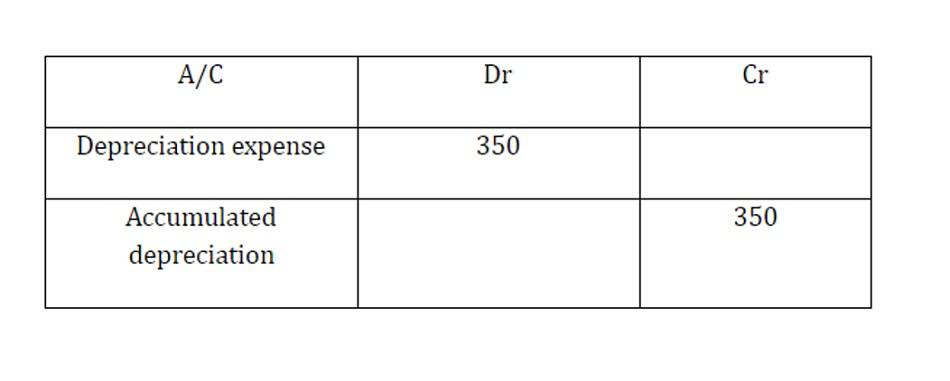
Therefore, the $416.67 of interest incurred in January (calculated as $100,000 x 5% / 12) is to be paid by February 5. Therefore, the company reports $416.67 of interest expense on its January income statement, as well as $416.67 of interest payable on its January balance sheet. The accrued interest for the party who owes the payment is a credit to the accrued liabilities account and a debit to the interest expense account.

What is Accounts Payable? Definition, Recognition, and Measurement, Recording, Example

Interest, therefore, is typically the last item before taxes are deducted to arrive at net income. Businesses with more assets are hit hardest by interest rate increases. For example, businesses that have taken out loans on vehicles, equipment or property will suffer most. Get instant access to lessons taught by experienced private equity pros and bulge bracket investment bankers including financial statement modeling, DCF, M&A, LBO, Comps and Excel Modeling. The $12,500 in interest expense for 2020 must be charged to the income statement for that year. The only difference in this scenario is the time frame for paying the interest charge.

What is Interest Expense?

For example, a small social media marketing company would need to pay its employees and pay for ads as part of its business. Only businesses like banks could consider interest expense directly part of their operations. A small cloud-based software business takes out a $100,000 loan on June https://intuit-payroll.org/ 1 to buy a new office space for their expanding team. The loan has 5% interest yearly and monthly interest is due on the 15th of each month. Interest expense is the amount a company pays in interest on its loans when it borrows from sources like banks to buy property or equipment.

Is Interest Expense an Operating Expense?

For the two-month period, the company will report Interest Expense of $2,000 (November’s and December’s interest of $1,000 each month). A business owes $1,000,000 to a lender at a 6% interest rate, and pays https://quickbooks-payroll.org/ interest to the lender every quarter. After one month, the company accrues interest expense of $5,000, which is a debit to the interest expense account and a credit to the interest payable account.

What Is Interest Expense in Accounting?

The same amount is also classified as revenue on the income statement. The revenue recognition principle and matching principle are both important aspects of accrual accounting, and both are relevant in the concept of accrued interest. The revenue recognition principle states that revenue should be recognized in the period in which it was earned, rather than when payment is received. The matching principle states that expenses should be recorded in the same accounting period as the related revenues. Accrued interest is calculated as of the last day of the accounting period.

Let’s assume that on December 1 a company borrowed $100,000 at an annual interest rate of 12%. The company agrees to repay the principal amount of $100,000 plus 9 months of interest when the note comes due on August 31. Interest payable accounts are commonly seen in bond instruments because a company’s fiscal year end may not coincide with the payment dates. For example, XYZ Company issued 12% bonds on January 1, 2017 for $860,652 with a maturity value of $800,000. The yield is 10%, the bond matures on January 1, 2022, and interest is paid on January 1 of each year. That’s because this is a cost that is paid consistently and monthly.

What Is Accrual Accounting, and How Does It Work?

accrual accounting

In general, sole proprietorships and small firms can employ cash accounting, whereas large businesses would often use accrual accounting when completing their tax returns. Accruals are revenues that have not yet been paid for and expenses that have not yet been paid. The four categories of accruals commonly reported on the balance sheet when using the accrual accounting method are as follows. This is important because it provides a more accurate picture of the company’s financial condition. For example, if a company sells products on credit, the revenue from the sale should be recorded in the period in which the sale occurs, even though the cash from the sale has not yet been received.

  • A law company is an example of this type of business, as it invoices its clients for the job it does but does not always receive payment immediately.
  • Investors can view these as real assets and liabilities instead of unrealized gains their balance sheet.
  • Here are the four types of accruals typically recorded on the balance sheet when following the accrual accounting method.
  • By recording accruals, a company can measure what it owes in the short-term and also what cash revenue it expects to receive.
  • When a company receives cash before a good has been delivered or a service has been provided, it creates an account called deferred revenue, also referred to as unearned revenue.
  • Cash accounting is the easier of the two methods, as organizations only need to record transactions when cash is exchanged.

It is usually done by creating a journal of all the transactions on the accounting system. A simple example of an accrual would be for some work that was completed but not invoiced yet. In general, the rules for recording accruals are the same as the rules for recording other transactions in double-entry accounting. The specific journal entries will depend on the individual circumstances of each transaction.

Accruals Accounting vs Cash Accounting

The entry is posted when the payment is received in February in cash accounting. Taxpayers are typically required by the appropriate taxation authority to consistently use the method of accounting that accurately captures the entity’s true income. Consistency is essential since the swapping of accounting methods can potentially create loopholes that a company can use to manipulate its revenue and reduce tax burdens. In general, cash accounting is allowed for sole proprietorships and small businesses, whereas large businesses will typically use accrual accounting when preparing its tax returns. Another example of an expense accrual involves employee bonuses that were earned in 2019, but will not be paid until 2020. The 2019 financial statements need to reflect the bonus expense earned by employees in 2019 as well as the bonus liability the company plans to pay out.

accrual accounting

Other, more complex transactions entail purchasing and selling on credit, which necessitates a corporation accounting for money that it will have to pay or receive at a later date. http://3dshoot.ru/3404178-725987990606f6ff94501a62be7bd30e/ remains an integral part of financial accounting today because it allows businesses to account for all transactions that have yet to take place concerning revenues and expenses alike. The accrual method of accounting is typically used by businesses that have a large number of accrual transactions.

How Does It Differ From Cash Accounting?

Using this method you record the transactions as they happen, rather than when cash changes hands. Accruals accounting is a way of recording expenses and revenues in the correct financial period. This makes it easier to understand how your company is doing financially. The main difference between accrual and cash basis accounting lies in the timing of when revenue and expenses are recognized. The cash method provides an immediate recognition of revenue and expenses, while the accrual method focuses on anticipated revenue and expenses.

accrual accounting

This accounting method is generally utilised by organisations with a high volume of accrual transactions. The accrual adjustment will debit the current asset account Accrued Receivables and will credit the income statement account Accrued Electricity Revenues. While there is no actual movement of cash in this scenario, the business has accrued $150 worth of revenue and expenses. You would typically use https://innovacoin.info/where-to-start-with-and-more-8/ when you want to track and manage your accruals. This can be useful for various purposes, such as managing budgets, seeking loans, and more. Accrual accounting should be used when businesses want to track and manage their accruals.

Related AccountingTools Courses

This content was produced by our Commercial Lending Director, Gary Hemming. Gary has over 15 years’ experience in financial services and specialises in bridging loans, commercial mortgages, development finance and business loans. He is widely respected in his field and regularly provides expert commentary for specialist trade publications, specialist business press as well as local and national press. This is an excellent technique to use because it’s easy to understand, but it’s not as accurate as full https://www.presbyterianmen.org/scotland-on-cusp-of-pink-extreme-weather-warning-for-snow.html.

  • Another way to keep track of accruals is to use an accrual spreadsheet.
  • Cash accounting records payments and receipts when they are received.
  • By recognizing revenues and expenses when they are earned or incurred, rather than only when payment is received or made, accruals provide a more accurate picture of a company’s financial position.
  • Both scenarios have resulted in the same figures on the statements P/L for electricity and rent received regardless of the actual bank payments/receipts in the period.
  • At Business.org, our research is meant to offer general product and service recommendations.